Project overview
The product
GEA-Spin is a connected laundry service for university housing. Smart GE Appliances machines report their status to a cloud platform. Students use a mobile app to find an open machine, run a cycle, and pay without coins or cards. Facilities staff get maintenance alerts and usage reports, and detergent is supplied through a P&G partnership built into the app.
The mandate
This was an enterprise systems project at IUPUI. The brief was bigger than an interface: design a product, a service, and a business model that hold together. I had to think about machines, cloud infrastructure, three different users, and the economics that would make the whole thing worth building.
Make campus laundry effortless for students and visible for facilities teams, while giving the university a reason to say yes: a connected service that pays for itself.
My role
I worked across the whole system on this project: running the research, building the personas, mapping the service and its architecture, designing the student app, and modeling the revenue case that justified it.
The hardest part was not the screens. It was holding three stakeholders, a piece of hardware, and a business model in view at the same time, and making sure a decision that helped one of them did not quietly break another.
The problem
Campus laundry is one of those services everyone tolerates and no one owns. Machines break and stay broken. Payment means coins or a separate card. Students walk over only to find every machine full. Facilities teams have no idea a machine is down until someone complains. Meanwhile, student housing is a large, growing, and nearly full market, which is exactly why a better service could pay for itself.
23M students
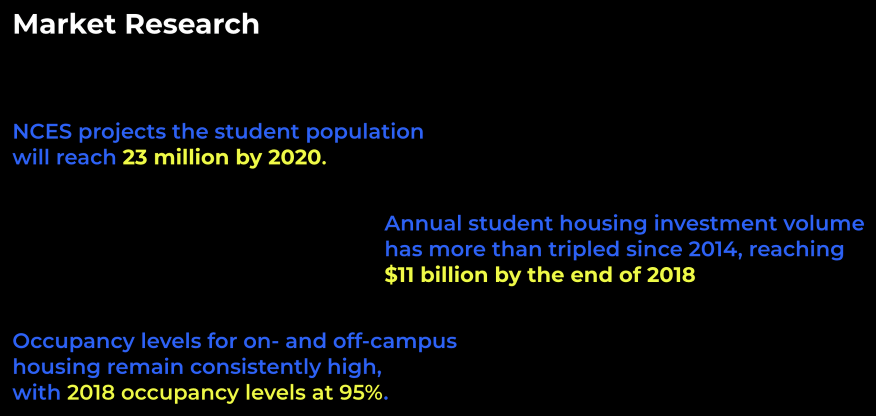
NCES projected the US student population would reach 23 million, a large captive base living in managed housing.
$11B invested
Annual student-housing investment more than tripled since 2014, reaching $11 billion by the end of 2018.
95% full
On- and off-campus housing stayed consistently full, with 2018 occupancy around 95%. The demand is reliable and recurring.
Research & discovery
I needed three angles to understand this space: how competitors solved it, what the market looked like, and what the people who actually live with campus laundry had to say.
Competitive analysis
Mapped three direct and five indirect competitors to find the patterns everyone shared and the gaps no one had filled.
Stakeholder interviews
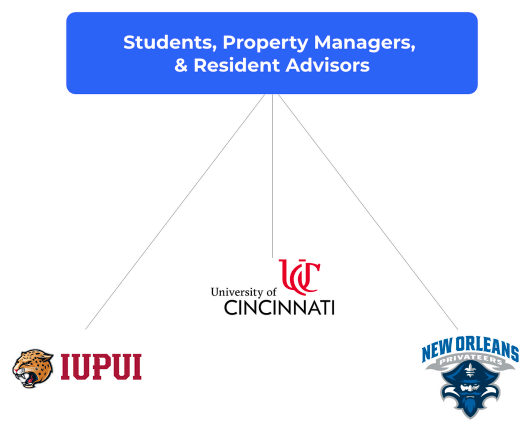
Ran 10 semi-structured interviews with students, dorm and property managers, and resident advisors across IUPUI and the University of Cincinnati.
Market research
Studied housing and technology trends to understand where the market was heading and what it was ready to adopt.
Who I talked to
How the process ran

What the interviews kept surfacing
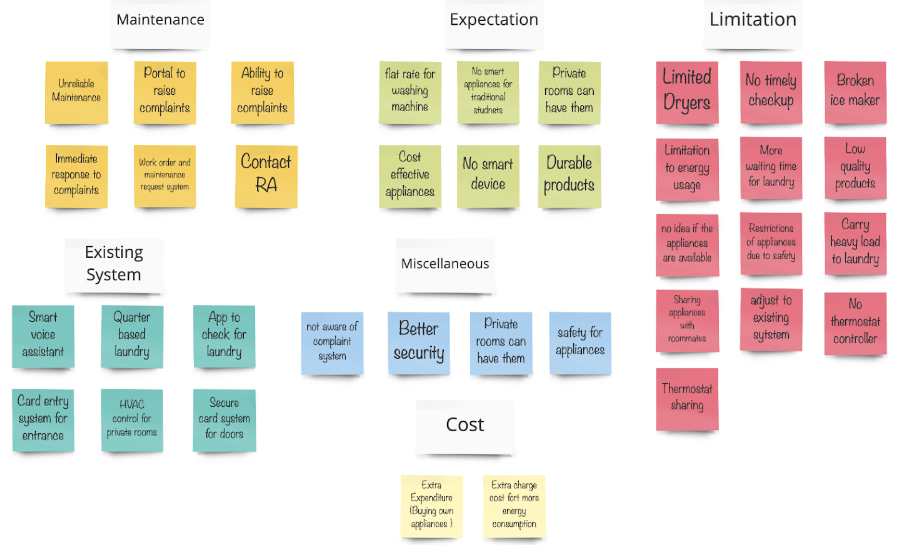
Affinity mapping
Maintenance is invisible until it fails
Nobody knew a machine was broken until a student found it broken. Facilities teams were reacting to complaints instead of seeing problems coming.
Payment is friction
Coins, a separate laundry card, a top-up kiosk. Students wanted laundry to cost what it costs and to pay the way they pay for everything else: from their phone.
Cost and sustainability pull together
Facilities staff cared about energy use and the cost of replacing old appliances. A connected system that runs efficiently and lasts longer answers both at once.
Three users, three jobs
Students want a clean, easy cycle. Facilities want machine health and fewer surprises. The university wants a service that does not cost it money. The design had to serve all three.
Personas
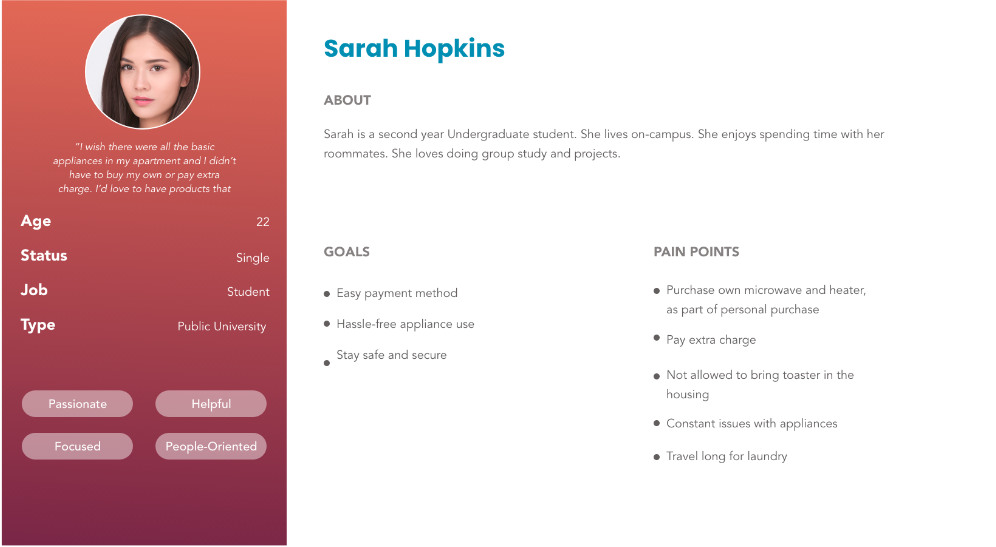
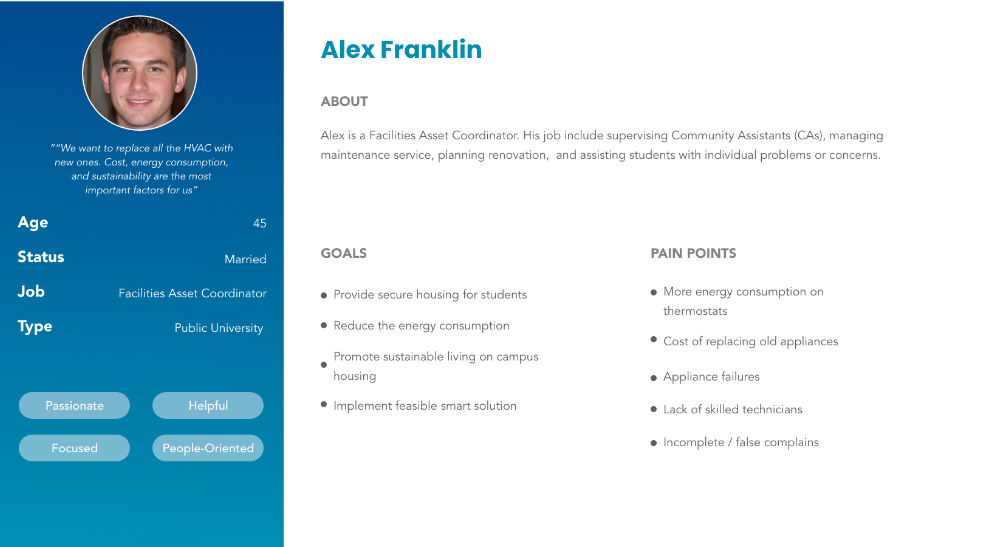
The system
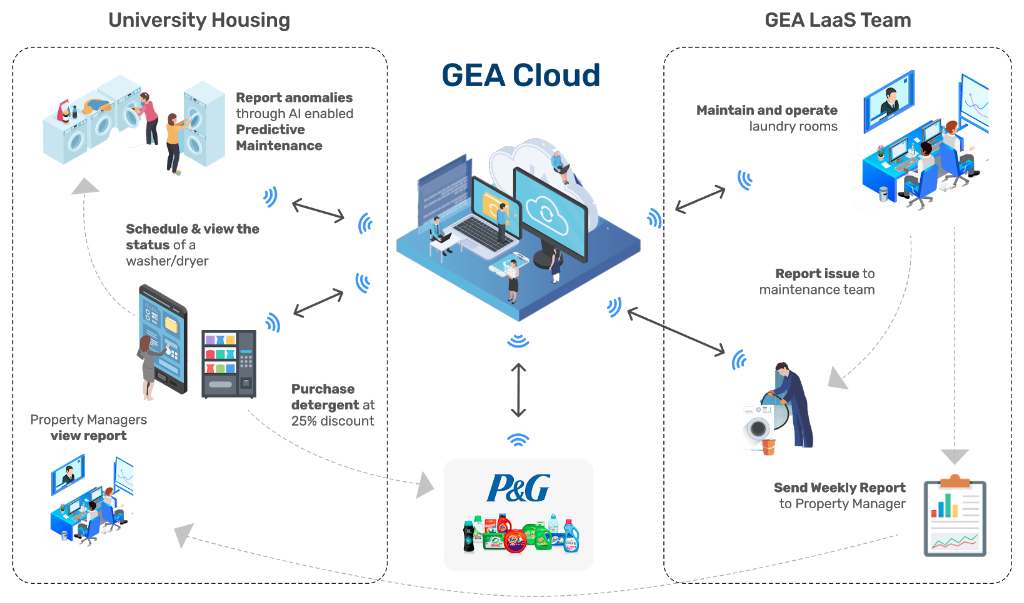
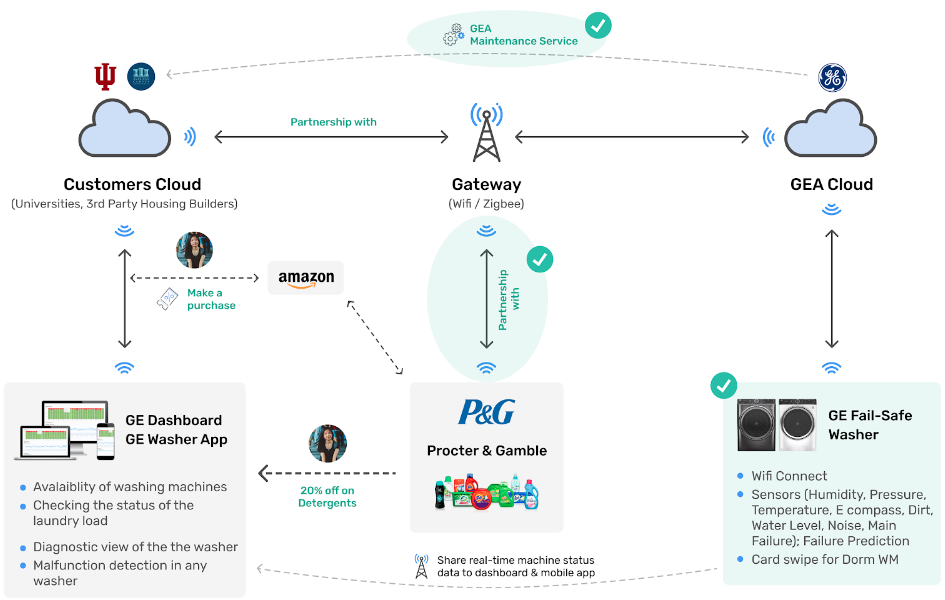
GEA-Spin is not an app with some machines attached. It is a service. Connected GE Appliances washers and dryers send their status through an IoT gateway to the GEA cloud, which talks to the student app, the facilities team, and a P&G detergent supply line. Each piece has a job, and the cloud is the hub that keeps them in sync.
Service architecture
The facilities side of the service
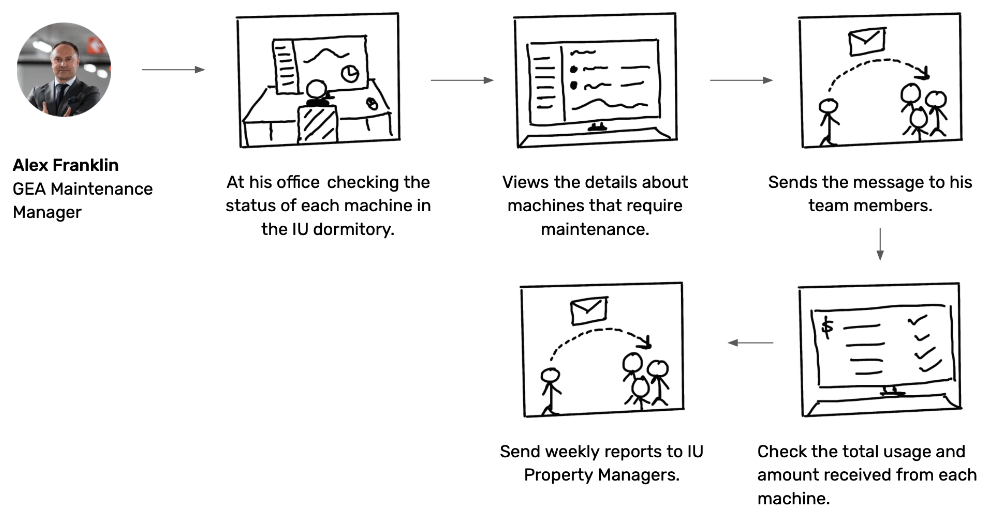
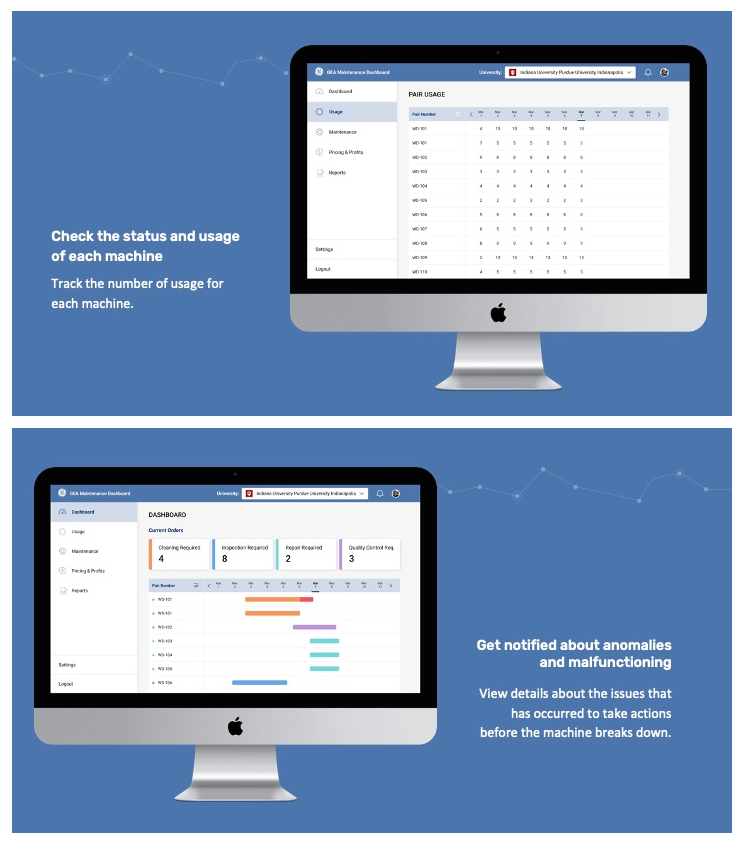
For someone like Alex, the value is visibility. He checks machine status across the dorm, sees which machines need attention, dispatches his team, and sends a weekly report to property managers that shows usage and the revenue each machine earned.
The student app
For students, the whole service collapses into three things: find a machine, run it, and keep detergent stocked. Each flow is built to be done in a few taps, with payment handled automatically so no one has to think about coins again.
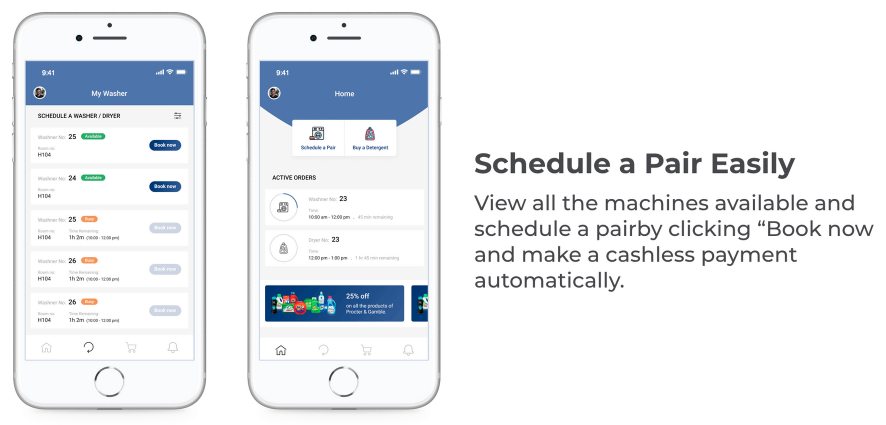
Schedule a pair
See every available washer and dryer in the building, book a pair, and let the app charge you automatically when the cycle starts. No machine roulette, no kiosk.
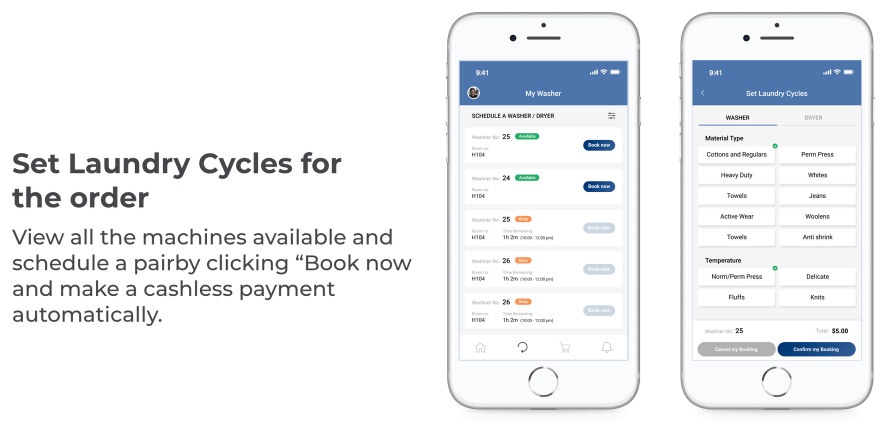
Set the cycle
Pick the wash and dry settings for the order and start it from the phone. The machine confirms, and the app tracks the run so students know exactly when their laundry is done.
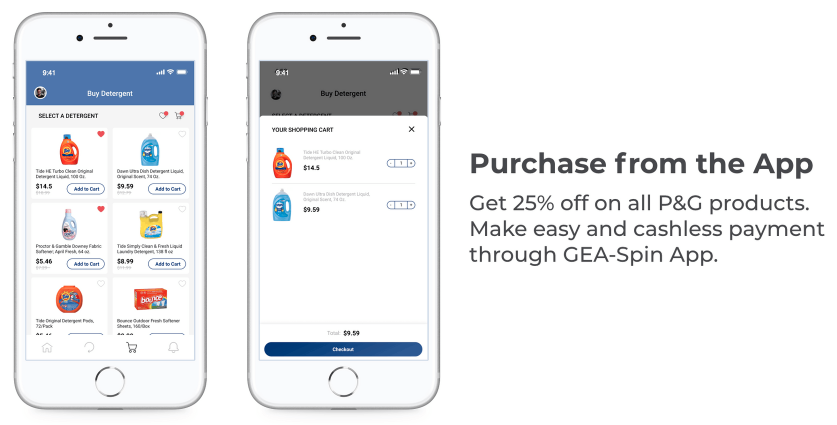
Restock detergent
Buy P&G detergent right inside the app at 25% off, paid the same cashless way. The supply partnership is what turns a hardware service into a recurring one.
The facilities dashboard
The number that makes it real
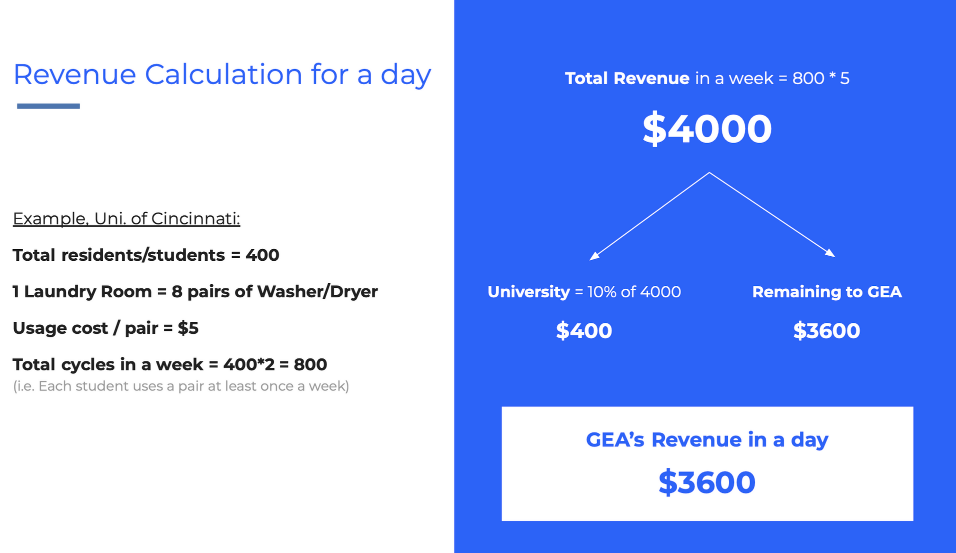
A service only gets built if the economics work. So I modeled a single site to see whether GEA-Spin could pay for itself and still hand the university a cut. It can.
The university earns for doing nothing but saying yes. That is the hook that makes the whole service adoptable.
GEA-Spin was the first time I designed a whole system instead of a screen flow. Hardware, cloud, three stakeholders, and a business model all had to fit, and the lesson stuck: a good interface does not save a service whose economics or maintenance model are broken. If I ran it again I would prototype the facilities dashboard with a real property manager early, because that side carries the value and I treated it as secondary for too long.